 Evan Reichard
2aee0765aa
Evan Reichard
2aee0765aa
Some checks failed
continuous-integration/drone/push Build is failing
- Replace "Raw TCP listener" references with http.Server/hijack model
- Update architecture diagram and description
- Add testing section to AGENTS.md with test summary
- Update key patterns to match current code
- Fix file locations table (add e2e_test.go, reconstructed_conn.go)
144 lines
5.4 KiB
Markdown
144 lines
5.4 KiB
Markdown
# Conduit
|
|
|
|
A lightweight tunneling service that exposes local services to the internet through a public server — similar to ngrok, but self-hosted.
|
|
|
|
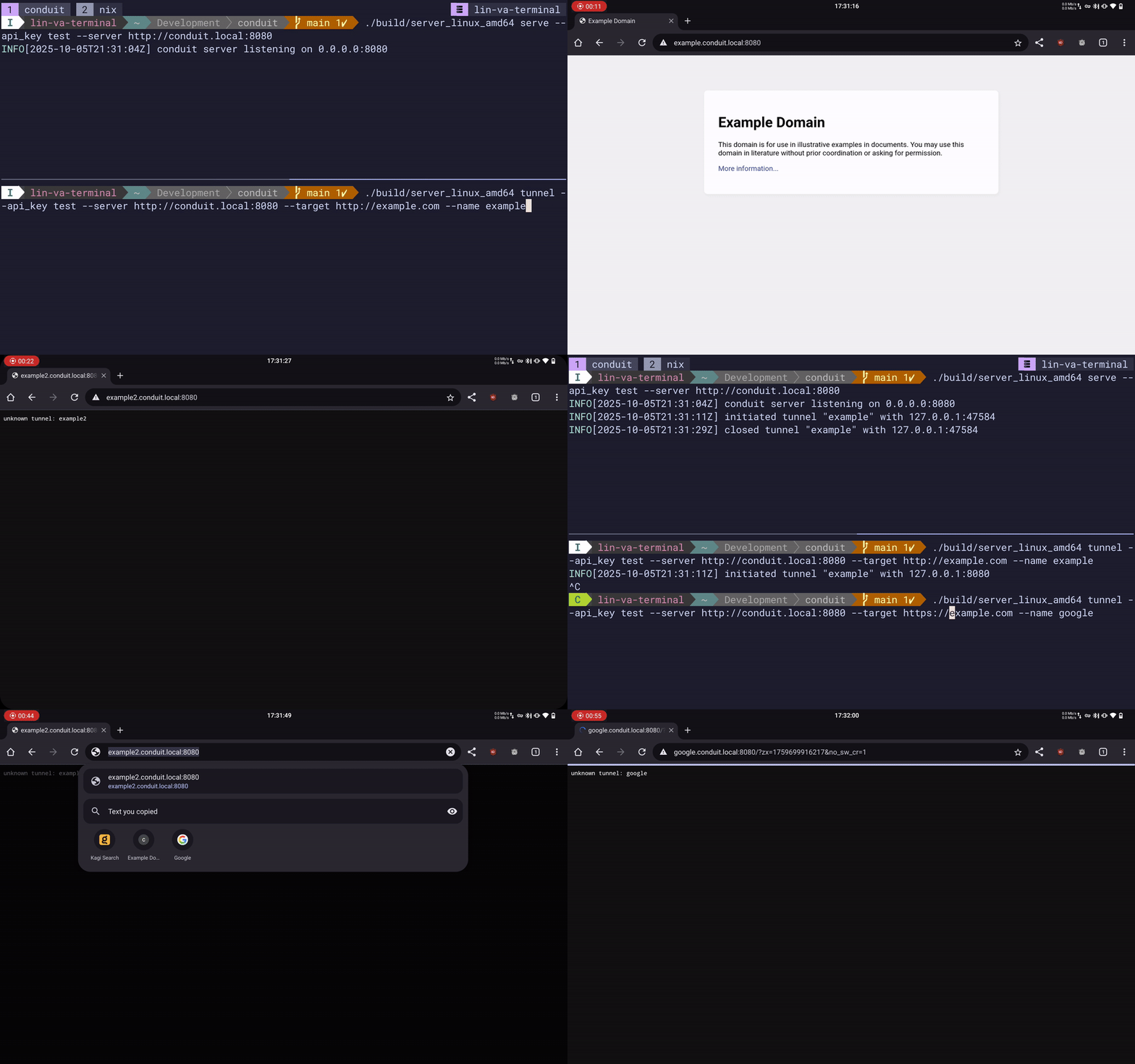
Deploy Conduit on a public server (e.g., `https://conduit.example.com`), then create tunnels from your local machine. Point a tunnel at a local endpoint (e.g., `localhost:8000`) and it becomes accessible at a subdomain like `https://black-fox-123.conduit.example.com`.
|
|
|
|
|
|
|
|
## Features
|
|
|
|
- **HTTP & TCP tunneling** — automatically detected based on the target scheme
|
|
- **Subdomain routing** — each tunnel gets a unique subdomain on the server
|
|
- **Auto-generated tunnel names** — random `color-animal-number` names when none is provided
|
|
- **Local tunnel monitor** — web UI on `:8181` with SSE-based live request/response inspection
|
|
- **API key authentication** — simple shared-key auth between client and server
|
|
- **Minimal footprint** — single binary, no external dependencies
|
|
|
|
## Architecture
|
|
|
|
```
|
|
┌──────────────┐ WebSocket ┌──────────────────┐
|
|
│ conduit │◄──────────────────────────► │ conduit │
|
|
│ tunnel │ (control + streams) │ serve │
|
|
│ (client) │ │ (public server) │
|
|
├──────────────┤ ├──────────────────┤
|
|
│ HTTP Fwd or │ │ http.Server │
|
|
│ TCP Fwd │ │ Subdomain router │
|
|
├──────────────┤ │ WS upgrade │
|
|
│ Tunnel │ └──────────────────┘
|
|
│ Monitor :8181│
|
|
└──────────────┘
|
|
```
|
|
|
|
The server uses `net/http.Server` to accept connections and inspects the HTTP `Host` header for routing. Requests to the base domain hit the control API; requests to subdomains are hijacked and forwarded over WebSocket to the matching tunnel client. The client then forwards traffic to the local target via either a reverse-proxy (HTTP) or direct TCP dial.
|
|
|
|
## Quick Start
|
|
|
|
### Prerequisites
|
|
|
|
- Go 1.25+ (or Docker)
|
|
|
|
### Build
|
|
|
|
```bash
|
|
# Local build (all platforms)
|
|
make build_local
|
|
|
|
# Docker
|
|
make docker_build_local
|
|
```
|
|
|
|
### Server
|
|
|
|
Run the server on a publicly accessible host:
|
|
|
|
```bash
|
|
conduit serve \
|
|
--server https://conduit.example.com \
|
|
--bind 0.0.0.0:8080 \
|
|
--api_key your-secret-key
|
|
```
|
|
|
|
Or with Docker:
|
|
|
|
```bash
|
|
docker run -p 8080:8080 \
|
|
-e CONDUIT_SERVER=https://conduit.example.com \
|
|
-e CONDUIT_API_KEY=your-secret-key \
|
|
conduit:latest
|
|
```
|
|
|
|
### Client
|
|
|
|
Create a tunnel to expose a local service:
|
|
|
|
```bash
|
|
# HTTP tunnel (auto-generates name)
|
|
conduit tunnel \
|
|
--server https://conduit.example.com \
|
|
--api_key your-secret-key \
|
|
--target http://localhost:8000
|
|
|
|
# Named TCP tunnel
|
|
conduit tunnel \
|
|
--server https://conduit.example.com \
|
|
--api_key your-secret-key \
|
|
--name my-service \
|
|
--target localhost:5432
|
|
```
|
|
|
|
The local tunnel monitor is available at `http://localhost:8181` for HTTP tunnels.
|
|
|
|
## Configuration
|
|
|
|
All options can be set via CLI flags or environment variables (`CONDUIT_` prefix):
|
|
|
|
### Server (`conduit serve`)
|
|
|
|
| Flag | Env Var | Default | Description |
|
|
|------|---------|---------|-------------|
|
|
| `--server` | `CONDUIT_SERVER` | `http://localhost:8080` | Public server address |
|
|
| `--api_key` | `CONDUIT_API_KEY` | — | API key (required) |
|
|
| `--bind` | `CONDUIT_BIND` | `0.0.0.0:8080` | Listen address |
|
|
| `--log_level` | `CONDUIT_LOG_LEVEL` | `info` | Log level |
|
|
| `--log_format` | `CONDUIT_LOG_FORMAT` | `text` | Log format (`text` or `json`) |
|
|
|
|
### Client (`conduit tunnel`)
|
|
|
|
| Flag | Env Var | Default | Description |
|
|
|------|---------|---------|-------------|
|
|
| `--server` | `CONDUIT_SERVER` | `http://localhost:8080` | Conduit server address |
|
|
| `--api_key` | `CONDUIT_API_KEY` | — | API key (required) |
|
|
| `--name` | `CONDUIT_NAME` | (auto-generated) | Tunnel subdomain name |
|
|
| `--target` | `CONDUIT_TARGET` | — | Local target address (required) |
|
|
| `--log_level` | `CONDUIT_LOG_LEVEL` | `info` | Log level |
|
|
| `--log_format` | `CONDUIT_LOG_FORMAT` | `text` | Log format (`text` or `json`) |
|
|
|
|
## Server API
|
|
|
|
| Endpoint | Description |
|
|
|----------|-------------|
|
|
| `/_conduit/tunnel?tunnelName=<name>&apiKey=<key>` | WebSocket tunnel registration |
|
|
| `/_conduit/info?apiKey=<key>` | JSON list of active tunnels |
|
|
|
|
## Project Structure
|
|
|
|
```
|
|
├── cmd/ # Cobra CLI commands (root, serve, tunnel)
|
|
├── config/ # Configuration parsing & logging setup
|
|
├── server/ # HTTP server, subdomain routing, hijack + WebSocket upgrade
|
|
├── tunnel/ # Tunnel, Stream, and Forwarder abstractions
|
|
├── store/ # In-memory request/response recording for the monitor
|
|
├── web/ # Local tunnel monitor HTTP server & SSE streaming
|
|
├── types/ # Shared message types
|
|
├── pkg/maps/ # Generic concurrent map
|
|
├── build/ # Compiled binaries (gitignored in practice)
|
|
├── Dockerfile # Single-stage Docker build
|
|
└── Makefile # Build & release targets
|
|
```
|
|
|
|
## License
|
|
|
|
See repository for license details.
|